

Americans are drinking less wine, vineyards are being removed and wineries are reducing production. What does a smaller, more selective market mean for America's most celebrated wine region?
Declining wine consumption will make Napa Valley smaller, more selective and more competitive. Wineries will produce fewer cases, carry less inventory and become more disciplined about the vineyards, wines and customers in which they invest. Napa's future will not depend on returning to the production levels of the past. It will depend on giving consumers a compelling reason to choose its wines when they are opening fewer bottles.
For decades, American wine consumption increased. Napa planted more vineyards, expanded winery capacity and built hospitality and distribution systems around continued growth. That market has changed. Aging core wine consumers, younger generations drinking less, greater interest in health and moderation, more beverage choices and economic pressures have all contributed to declining consumption.
California eventually found itself producing more wine than consumers were buying. Excess grapes became excess wine and inventory accumulated across wineries, distributors and retailers. The industry is now making a substantial physical adjustment to meet a smaller market.
One of the newest influences may be the rapid adoption of GLP-1 medications such as Ozempic, Wegovy, Mounjaro and Zepbound.
Gallup estimates that 11% of American adults now use a GLP-1 medication for weight loss, up from only 3% in 2024. That represents approximately 29 million people. A separate KFF survey, which also included treatment for diabetes and other conditions, placed current use at approximately 12% of adults.
The potential relevance to wine extends beyond eating less. Many users report that they feel satisfied after one glass or experience less interest in alcohol altogether. Early clinical research supports that possibility: semaglutide has been shown to reduce alcohol craving and the amount consumed on drinking occasions, although the evidence remains preliminary.
No one yet knows the long-term effect on wine consumption. But a behavioral change involving approximately one in nine American adults—and growing rapidly—is no longer a marginal consideration for Napa Valley.
More than 38,000 California vineyard acres were removed between October 2024 and August 2025, leaving approximately 477,000 standing acres. Based on additional estimated removals, California could finish 2026 with fewer than 442,000 acres—roughly 20% fewer than in 2023.
Not all remaining vineyards are actively or economically productive. After abandoned, mothballed and minimally farmed acreage is considered, California may now be approaching the estimated 410,000 to 425,000 productive acres needed to support current consumption.
Napa's vineyard footprint is contracting as well. Napa County had approximately 46,245 acres of winegrape vineyards in 2023. We estimate that approximately 3,100 acres were removed in both 2025 and 2026, while only about 1,000 acres were planted during the same period. That would reduce Napa's total vineyard acreage to approximately 41,045 acres by the end of 2026—a net loss of roughly 5,200 acres, or 11.2%, in just three years.
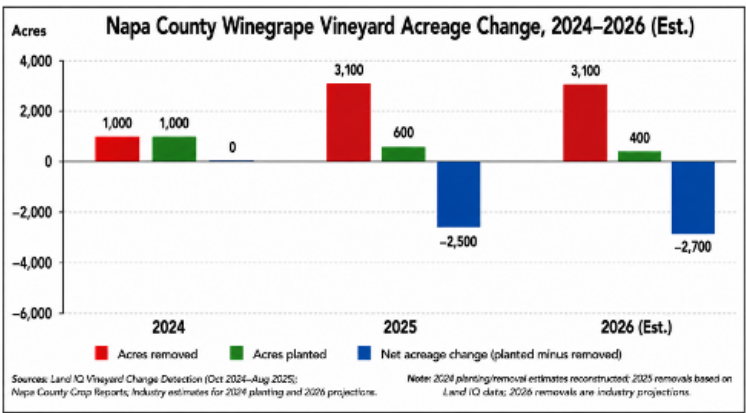

The unusually light 2026 Napa harvest is accelerating the correction. Difficult spring weather could leave production as much as 30% below a normal year. Fewer vineyard acres and a smaller harvest mean substantially less new wine entering the market.
California’s grape surplus may therefore be largely behind us. But supply may be balancing only at today’s level of consumption. If Americans continue drinking less wine, the market will have to become smaller still.
Napa's contraction is already visible in vineyard removals, lighter production, winery consolidation, facility closures and a growing number of distressed sales. But this is not yet a story of Napa wineries disappearing wholesale. It is a story of a region becoming smaller, more disciplined and more selective.
Napa Valley remains one of the strongest names in global wine, but the Napa name alone may no longer be enough.
Historic estates, independent growers, small direct-to-consumer wineries and brands dependent on national distribution face very different circumstances. As wineries reduce production, they will become more selective about what they make and where their grapes come from.
We believe that high-quality Cabernet Sauvignon from recognized Napa appellations, established vineyards and distinctive mountain sites will be among the first grape-market segments to recover.
In this market, place itself becomes a brand. Fruit from an identifiable mountain, vineyard or block gives a winery something meaningful—and difficult to replicate—to offer its customers.
Mountain vineyards are limited, challenging and expensive to farm. Their slopes, soils, exposures and elevations can produce Cabernet with distinctive structure and an ability to age. Not every mountain vineyard will benefit equally, but exceptional mountain fruit with a recognized provenance should be better positioned than grapes without a compelling identity.

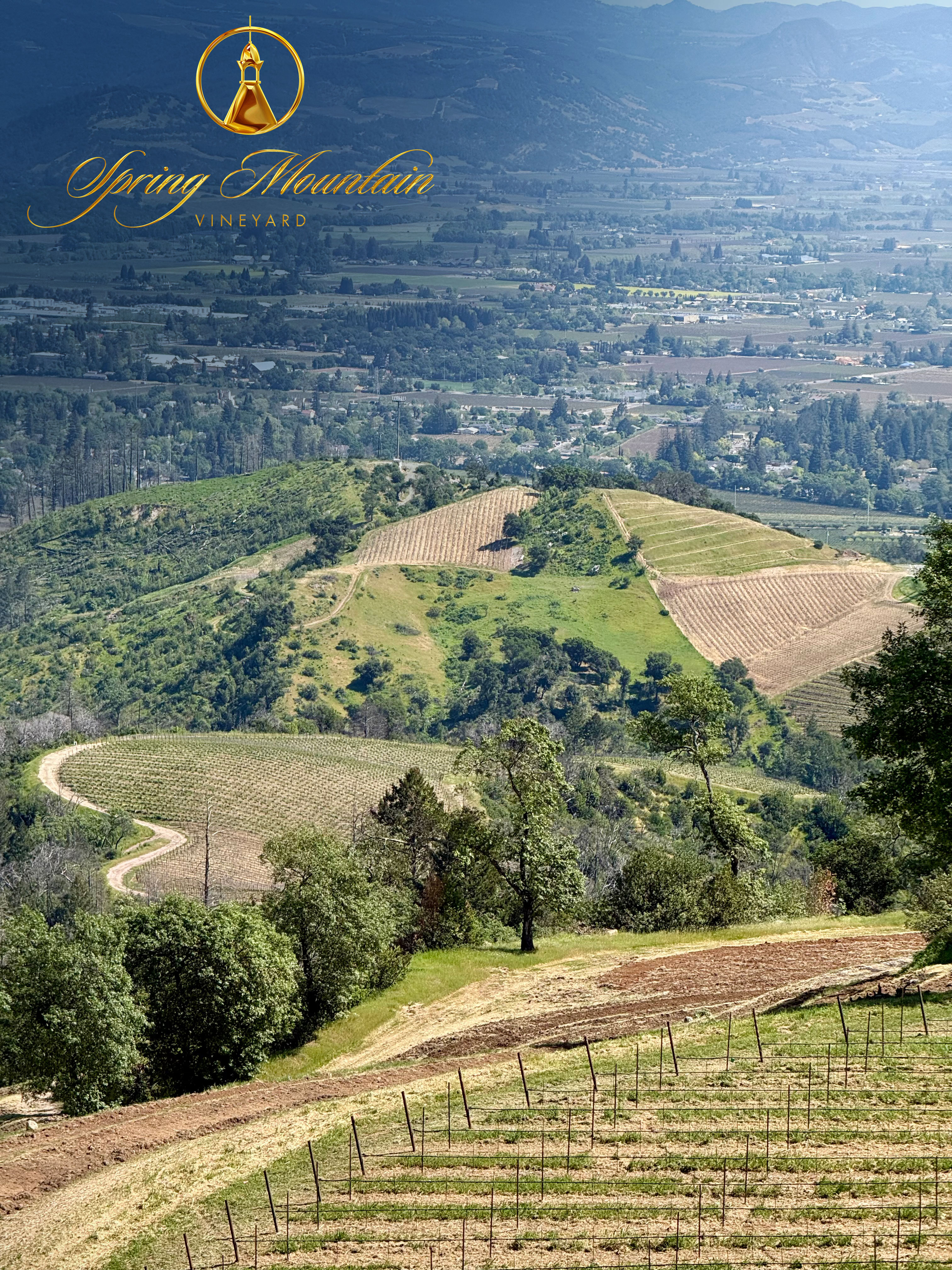
At Spring Mountain Vineyard, this outlook is shaping how we rebuild our historic estate. We are not asking how much wine the property can produce. We are asking which sites can produce wines worthy of the next generation.
Every decision—from varieties, clones and rootstocks to row orientation and farming—is intended to express the differences among our mountain sites. As the replanted vineyards mature, we also expect to offer a limited amount of mountain-grown Cabernet Sauvignon to select producers.
We believe Napa's grape market will recover selectively, beginning with fruit that offers exceptional quality, distinguished provenance and a clear sense of place.
Napa Valley will likely produce less wine in the future. That does not diminish its potential. It raises the standard.
If consumers are going to open fewer bottles, Napa must give them a more compelling reason to remember each one.
• California Association of Winegrape Growers and Land IQ, 2025 California Winegrape Vineyard Mapping Project.
• Gallup National Health and Well-Being Index, GLP-1 usage update, September 2026.
• KFF Health Tracking Poll, GLP-1 use among U.S. adults, November 2025.
• JAMA Psychiatry, randomized clinical trial of semaglutide and alcohol consumption, 2025.
• Napa County acreage and 2026 harvest figures are estimates and should be updated when final 2026 statistics are reported.